

Engineering would be a lot easier if water came at the same time.
It doesn’t.
The quality of water that is pumped into a residential system is likely to fluctuate throughout the day. Industrial and commercial facilities could be experiencing operating peaks. Stormwater levels can drastically change with the weather. Clean-water demand also rises and decreases depending on the use.
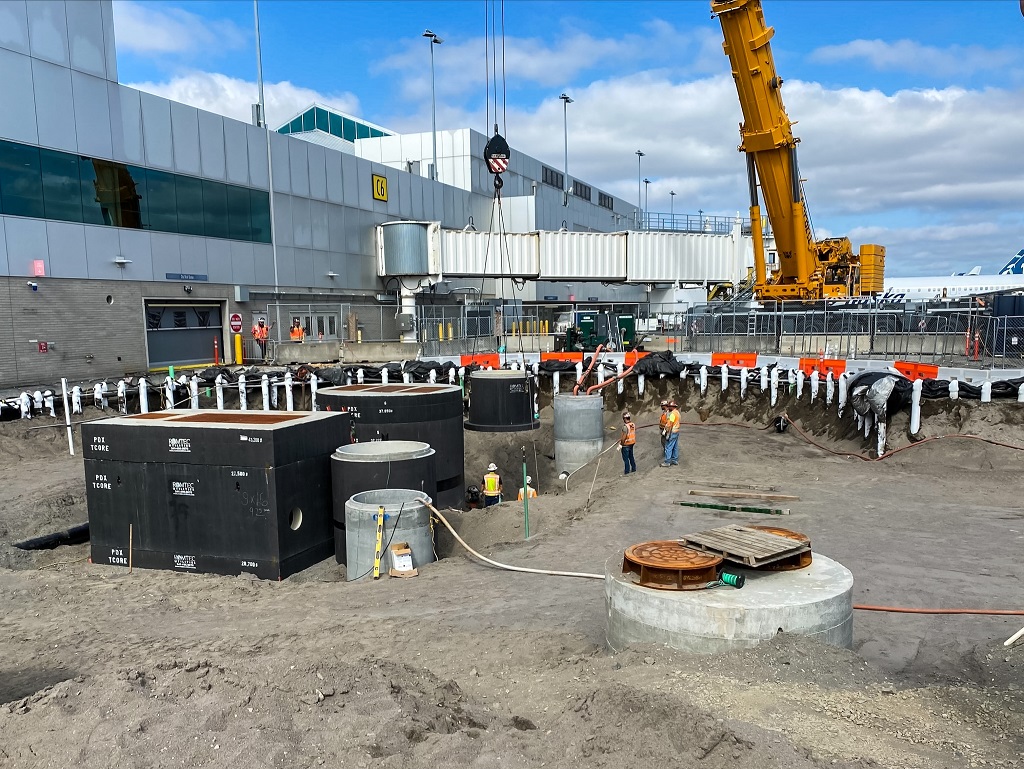
Image credit: romtecutilities.com
As a result, designing a pump station isn’t simply a matter of identifying one flow number and selecting equipment capable of meeting it. Engineers must understand the various conditions the system will encounter.
Think beyond maximum capacity, but also operational conditions
It’s obvious that maximizing flow is an important aspect, but it only represents an aspect of the operation of the station. Imagine that a wastewater treatment system was created to handle a large maximum flow. Most of the time the flow inflow could be significantly lower. However, the station has to function properly during these normal periods.
It also raises issues related to wet-well sizing, sizing the pump as well as control of head condition, how to adapt equipment when demand changes.
A properly designed package pumping system brings these considerations together around the actual requirements of the facility instead of treating maximum pump capacity as the entire design objective.
The wastewater industry has its own day-to-day rhythm
The conditions of the influent at the wastewater liftstations that serve households as well as businesses or municipal infrastructure may change during the course of the operation.
The system needs to be able to collect water and operate its pumps in accordance with the control strategy established by the station. This process involves design and dimensions of the structure as well as pumping gear, valves and piping as well as electrical components.
Other considerations specific to the site could enter the design. Romtec Utilities will incorporate any other systems like grinders vaults or odor-control equipment when needed. It’s more economical to create a station around a specific task than to use general configurations for every wastewater facility.
Stormwater Changes Much More Rapidly
Stormwater provides a totally different operational scenario. A stormwater facility can be quite quiet during dry conditions, but then receive a huge flow of water during a severe weather event. The station may be part of a larger flood-control treatment, detention, or drainage plan, which makes the stormwater plan surrounding it an integral part of the design.
Romtec Utilities evaluates factors including flow rates that are required as well as head conditions, system size, site requirements, and environmental factors when designing these systems.
A station serving a commercial development may therefore look distinct from one that was designed for municipal stormwater applications.
Both head conditions and flow are vital.
The ability to move 1,000 gallons is just part of the engineering problem. Engineers also need to know where the water is going to go and the level of resistance required by the pumping system.
Pumps operate at different head levels depending on the system’s configuration, such as the piping and discharge conditions, for example.
The relationship between flow rate and head is one reason why deciding on a motor only on its capacity is not enough. Technology and station layout must match the hydraulic requirements of the particular application.
Create a design that is based on the conditions the station will be exposed to
Romtec Utilities creates customized pumping system for wastewater, stormwater and clean water systems. They also design and develop systems for boosters, industrial and other applications. The process involves preliminary design budgeting, planning sets, budgeting along with system components, documentation, starting and testing.
The principle behind engineering is that the real pumping systems can’t function under a single set of conditions.
They face changing demands, flows and particular hydro requirements of the project. A successful station must be engineered for that reality.